
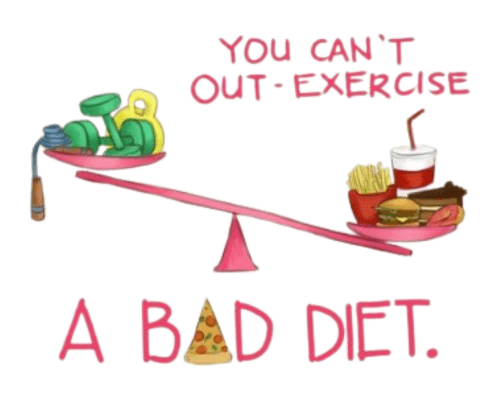
You Can’t Out-Train a Bad Diet… But You Still Need to Train — Here’s Why
Nov 24/2025, by Michael Fouts
Read time: 6-8 minutes
We’ve all seen it before: someone spends hours in the gym, but their body composition barely changes. Then frustration sets in, and they start to wonder if training is even worth it.
Here’s the truth: you can’t out-train a bad diet, but that doesn’t mean training is optional. Nutrition and exercise are partners, not competitors. Food controls the energy balance that determines fat loss, but training shapes the body that fat loss reveals.
In this post, we’ll explain why both matter, how they work together, and what happens when one is missing.
1. Why You Really Can’t Out-Train a Bad Diet
Fat loss ultimately comes down to energy balance: calories in versus calories out. You can spend an hour crushing a workout, but that might only burn 300–500 calories. One extra latte and a pastry can wipe that out in minutes.
Let’s look at an example.
Jake started running five days per week, thinking it would offset his nightly snacks. After three months, his weight hadn’t changed. When we reviewed his food log, it was clear: his calorie intake had increased because he was hungrier from all the cardio. He was “rewarding” his workouts without realizing it.
This is where many people get stuck. Exercise can increase hunger and make it easy to overeat, especially when you view workouts as permission to indulge.
In short, you can’t out-train a bad diet because training alone can’t overcome consistent overeating or poor food quality.
2. But Training Still Matters — Here’s Why
If nutrition drives fat loss, training determines what kind of weight you lose and how your body looks and feels as a result. Without resistance training, you risk losing muscle alongside fat, slowing metabolism and leading to that “skinny-fat” look.
Training also influences far more than appearance. Strength workouts improve insulin sensitivity, bone density, cardiovascular health, and mental well-being.
Think of it this way: nutrition gets you smaller. Training makes you better.
What consistent training does:
- Preserves lean muscle while losing fat
- Boosts metabolism, helping you maintain results
- Improves performance and energy
- Supports healthy aging and longevity
When you train regularly, your body uses food more efficiently, meaning your “good diet” becomes even more effective.
3. The Best Results Come from Combining Both
Nutrition creates the calorie deficit. Training determines where the change comes from, mostly fat, not muscle. Together, they form the foundation of sustainable fat loss and performance.
Consider two clients with identical calorie deficits:
- Client A focuses only on food, doing minimal exercise.
- Client B eats similarly, but strength trains three to four times per week.
After eight weeks, both lose weight, but Client B looks leaner, stronger, and feels more energetic. Client A may be smaller, but weaker and more fatigued.
The takeaway: a great diet without training leads to weight loss, but not necessarily a stronger, healthier body. A great training plan without nutrition leads to frustration and plateaus. You need both.
4. Training Helps You Keep the Weight Off
One of the biggest predictors of long-term weight maintenance is physical activity. Studies consistently show that people who keep the weight off are the ones who stay active.
Sarah lost 25 pounds by improving her diet, but kept it off by committing to her strength routine and walking daily. She didn’t have to be perfect, just consistent.
Training builds habits that make staying lean easier:
- Regular workouts increase calorie expenditure without feeling restrictive
- More muscle means a higher resting metabolism
- Staying active improves mood and makes healthy eating easier to sustain
5. What This Looks Like in Practice
If you’re serious about fat loss, here’s the formula we use with our clients:
Nutrition:
- Focus on a moderate calorie deficit (300–500 calories below maintenance)
- Prioritize protein and fibre for fullness
- Build meals around whole, nutrient-dense foods most of the time
Training:
- Strength train 3–4 days per week
- Include compound lifts like squats, presses, and rows
- Add low-impact cardio or steps to support recovery and overall health
- Get adequate sleep and rest days; they’re part of the process
You don’t need perfection. You need structure, balance, and consistency.
The Bottom Line
“You can’t out-train a bad diet” is true, but the other half of that truth is that you still need to train. Nutrition might drive fat loss, but training builds the body, confidence, and health that make those results worth it.
The goal isn’t to choose between diet and exercise. It’s to make them work together. Nail your nutrition, train with purpose, and your progress will finally reflect the effort you’ve been putting in.
Related Posts:
 https://overhaulfitness.ca/wp-content/uploads/2026/02/Blog-Featured-Photo-495x400-10.png
400
495
Michael Fouts
https://overhaulfitness.ca/wp-content/uploads/2022/09/Screen-Shot-2022-09-01-at-9.56.35-AM.png
Michael Fouts2026-02-13 09:08:532026-02-13 09:08:53Hit a Fat-Loss Plateau? Here’s Exactly How to Break Through It
https://overhaulfitness.ca/wp-content/uploads/2026/02/Blog-Featured-Photo-495x400-10.png
400
495
Michael Fouts
https://overhaulfitness.ca/wp-content/uploads/2022/09/Screen-Shot-2022-09-01-at-9.56.35-AM.png
Michael Fouts2026-02-13 09:08:532026-02-13 09:08:53Hit a Fat-Loss Plateau? Here’s Exactly How to Break Through It https://overhaulfitness.ca/wp-content/uploads/2026/01/Blog-Featured-Photo-495x400-16.png
400
495
Michael Fouts
https://overhaulfitness.ca/wp-content/uploads/2022/09/Screen-Shot-2022-09-01-at-9.56.35-AM.png
Michael Fouts2026-01-14 19:14:582026-01-14 19:14:58Alcohol and Weight Loss: Can You Drink and Still Lose Fat?
https://overhaulfitness.ca/wp-content/uploads/2026/01/Blog-Featured-Photo-495x400-16.png
400
495
Michael Fouts
https://overhaulfitness.ca/wp-content/uploads/2022/09/Screen-Shot-2022-09-01-at-9.56.35-AM.png
Michael Fouts2026-01-14 19:14:582026-01-14 19:14:58Alcohol and Weight Loss: Can You Drink and Still Lose Fat? https://overhaulfitness.ca/wp-content/uploads/2026/01/1440-530-website-banner-on-page-image.png
530
1440
Michael Fouts
https://overhaulfitness.ca/wp-content/uploads/2022/09/Screen-Shot-2022-09-01-at-9.56.35-AM.png
Michael Fouts2026-01-08 13:46:192026-01-08 13:46:19How Walking and NEAT Drive Fat Loss More Than You Think
https://overhaulfitness.ca/wp-content/uploads/2026/01/1440-530-website-banner-on-page-image.png
530
1440
Michael Fouts
https://overhaulfitness.ca/wp-content/uploads/2022/09/Screen-Shot-2022-09-01-at-9.56.35-AM.png
Michael Fouts2026-01-08 13:46:192026-01-08 13:46:19How Walking and NEAT Drive Fat Loss More Than You Think