
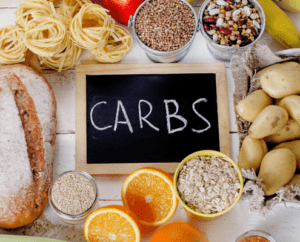
Do You Really Need to Cut Carbs to Lose Fat? The Science Says No.
Nov 24/2025, by Michael Fouts
Read time: 6-8 minutes
If you’ve ever tried to lose fat, chances are someone told you to “cut carbs.” Bread is the problem. Pasta is the enemy. Rice is ruining your progress.
Low-carb and keto-style diets are often marketed as the fastest path to fat loss. And while they can work, the bigger question is whether cutting carbs is actually necessary.
Short answer: no. Let’s unpack why carbs get blamed, what the science really says about fat loss, and how to think about carbohydrates in a way that actually supports your goals.
Why Carbs Get Blamed for Fat Gain
Carbohydrates often get labeled as fattening because they influence insulin, and insulin has a role in nutrient storage. This leads to the common belief that eating carbs automatically leads to fat gain.
But insulin is not the villain. It’s a normal hormone that helps move nutrients into cells. You release insulin when you eat carbohydrates, but you also release it when you eat protein.
Fat gain occurs when total calorie intake exceeds what your body needs over time. It is not caused by carbohydrates alone.
Example: Two people eat identical calories and protein. One eats moderate carbs, the other very low carbs. If calories are matched, fat loss is nearly identical.
This has been demonstrated repeatedly in controlled studies. When calories and protein are equal, low-carb diets do not outperform balanced diets for fat loss.
Why Low-Carb Diets Sometimes Work
If cutting carbs is not required, why do so many people see results when they try it?
There are a few common reasons.
1. Reduced calorie intake
Cutting carbs often eliminates highly processed foods. Fewer snacks, fewer desserts, fewer refined grains. That naturally reduces calories.
2. Reduced water weight
Carbohydrates are stored in muscles and liver as glycogen, and glycogen binds water. When carbs are reduced, glycogen drops and water weight falls quickly. The scale moves fast, but much of it is water, not fat.
3. Appetite control
Higher-protein, lower-carb diets can increase satiety for some individuals, making it easier to maintain a calorie deficit.
One client cut carbs drastically and dropped six pounds in two weeks. He assumed it was all fat. In reality, much of it was water loss. When carbs were reintroduced strategically, weight returned slightly but body composition remained improved.
Low-carb can work. It is just not magic.
What Actually Drives Fat Loss
Fat loss comes down to three primary factors:
- A sustainable calorie deficit
- Adequate protein to preserve muscle
- Consistency over time
Carbohydrates can fit into all three.
In fact, carbs play an important role in:
- Fuelling strength training and performance
- Supporting recovery
- Maintaining energy and mood
- Providing fibre for digestion and satiety
For active individuals especially, extremely low carb intake can reduce training intensity, which may indirectly reduce fat-loss progress.
Do You Ever Need to Reduce Carbs?
Reducing carbohydrates can be useful in certain contexts.
- If total calorie intake is too high and carb-heavy foods are the main source
- If someone struggles with blood sugar regulation
- If appetite control improves with a moderate reduction
Notice the word moderate.
We rarely see long-term success with complete carb elimination unless it genuinely fits someone’s lifestyle and preferences. For many, it leads to restriction followed by rebound eating.
A client eliminated all carbs Monday through Friday, then overate on weekends. Once we reintroduced balanced portions daily, consistency improved and fat loss resumed.
A More Practical Approach to Carbs
Instead of asking, “Should I cut carbs?” try asking: “Are my carbs supporting my goals?”
Here’s a simple framework:
- Prioritize whole-food carbohydrate sources such as fruit, vegetables, legumes, whole grains, and potatoes
- Time higher-carb meals around training sessions
- Keep protein consistent across meals
- Avoid mindless snacking on refined carbs
This approach maintains performance and energy while keeping calorie intake controlled.
The Fear of Carbs Often Misses the Bigger Picture
When fat loss stalls, carbs are often the first thing people cut. But more often than not, the real issue is portion size, liquid calories, low daily movement, or inconsistent adherence.
Carbs are simply an easy target.
Eliminating them may create short-term results, but long-term fat loss depends on habits you can maintain.
The Bottom Line
You do not need to cut carbs to lose fat. The science is clear: calorie balance and protein intake matter more than carb elimination.
Carbohydrates can be part of an effective fat-loss plan, especially for those who train regularly and value performance.
Rather than fearing carbs, focus on total intake, food quality, and consistency. Sustainable fat loss rarely comes from removing entire food groups. It comes from building habits you can live with.
If your current strategy involves eliminating carbs and it feels exhausting, there is another way. And it probably includes rice, potatoes, and fruit, just in portions that align with your goals.
Related Posts:
 https://overhaulfitness.ca/wp-content/uploads/2026/05/banana_20260519_132326_487201-scaled.jpg
1143
2048
Michael Fouts
https://overhaulfitness.ca/wp-content/uploads/2022/09/Screen-Shot-2022-09-01-at-9.56.35-AM.png
Michael Fouts2026-05-26 17:20:522026-05-26 17:20:574 Reasons You’re Not Getting Stronger (And How to Fix Each One)
https://overhaulfitness.ca/wp-content/uploads/2026/05/banana_20260519_132326_487201-scaled.jpg
1143
2048
Michael Fouts
https://overhaulfitness.ca/wp-content/uploads/2022/09/Screen-Shot-2022-09-01-at-9.56.35-AM.png
Michael Fouts2026-05-26 17:20:522026-05-26 17:20:574 Reasons You’re Not Getting Stronger (And How to Fix Each One) https://overhaulfitness.ca/wp-content/uploads/2026/05/banana_20260513_101330_116665-scaled.jpg
1143
2048
Michael Fouts
https://overhaulfitness.ca/wp-content/uploads/2022/09/Screen-Shot-2022-09-01-at-9.56.35-AM.png
Michael Fouts2026-05-13 20:05:112026-05-13 20:05:11Zone 2 Cardio: How to Build It Into Your Training Program
https://overhaulfitness.ca/wp-content/uploads/2026/05/banana_20260513_101330_116665-scaled.jpg
1143
2048
Michael Fouts
https://overhaulfitness.ca/wp-content/uploads/2022/09/Screen-Shot-2022-09-01-at-9.56.35-AM.png
Michael Fouts2026-05-13 20:05:112026-05-13 20:05:11Zone 2 Cardio: How to Build It Into Your Training Program https://overhaulfitness.ca/wp-content/uploads/2026/05/banana_20260508_064020_690763-scaled.jpg
1143
2048
Michael Fouts
https://overhaulfitness.ca/wp-content/uploads/2022/09/Screen-Shot-2022-09-01-at-9.56.35-AM.png
Michael Fouts2026-05-09 10:57:292026-05-09 10:57:29What Is Hybrid Training? The 2026 Workout Style Explained
https://overhaulfitness.ca/wp-content/uploads/2026/05/banana_20260508_064020_690763-scaled.jpg
1143
2048
Michael Fouts
https://overhaulfitness.ca/wp-content/uploads/2022/09/Screen-Shot-2022-09-01-at-9.56.35-AM.png
Michael Fouts2026-05-09 10:57:292026-05-09 10:57:29What Is Hybrid Training? The 2026 Workout Style Explained
