Lifting Your Way to Fat Loss Success: The Power of Weight Training
Sep 4, 2023 by Michael Fouts
Read time: 3 min.
The best weight loss strategy includes weight training, I’ll explain why in this post.
In a perfect world when you lose weight you just lose fat. Unfortunately, that’s never the case. You will lose some muscle too.
To understand how you lose fat, or muscle, in the first place let’s quickly review this. A good analogy I like to use is the “energy bucket” analogy. This bucket relates to your energy needs and metabolism. Each day your body has to fill that bucket up. It can be filled up with energy that you consume via food or drink, or your body will break down it’s own stores (fat, and muscle) to fill it up.
- Oppositely, if you over-fill the bucket then your body doesn’t have to break anything down and instead the “spillage and overflow” will be stored – most often as fat.
Everyone has a different energy bucket size, the size being influenced by: height, weight, gender, the amount of lean muscle mass you have, and in some part your genetics.
- Quick side note: you’ll notice that based on the characteristics that define how big a given “energy bucket” is, males will naturally have a larger energy bucket. This puts them at an advantage when they want to lose weight.
For weight loss, there are different ways that you “under-fill” the energy bucket. Some people choose to do it through diet alone, some choose to do it through exercise alone, and some do it through both. It should make sense that it’s easiest to “under-fill” your bucket by a combination approach of diet and exercise.
[showhide type=”hiddentext” more_text=”Click here to see some numbers of what that looks like” less_text=”Hide”]
With your diet, you can comfortably restrict ~500 calories per day. Do this consistently 7 days in a row, and voila – that’s 1 pound; theoretically 1 lb. = 3500 calories. Exercise in addition to this and you’ll push that 3500 calories more towards 7000 (2 lbs.).
For an example sake, let’s look how how we could create a 7000 calorie deficit goal – this a realistic, but more aggressive, weight loss goal.
- Diet alone: Creating a 7000 caloric deficit per week through diet alone is very hard. A typical person’s maintenance (fills up the energy bucket) without any exercise is around 1700-2300 calories per day; in some cases less. Therefore they’d need to eat around 1200 calories, or less, per day to reach 7000 calories. If you talk to most people on a 1200 calorie per day diet, I assure you they aren’t having too much fun.
- Exercise alone: Exercising to create a 7000 caloric deficit is also quite hard. Most people in a given hour of any exercise burn around 300-400 calories; there will also be some extra calories burned due to an elevated heart rate in the following 24 hours. Call it 500 calories from 1 hour of exercise, and you’re looking at 14 hours ( 7000/500) hours of exercise per week. Yeah, that’s a lot. And, keep in mind this deficit needs to be maintained with the same caloric intake throughout without eating more food; most people often eat more when they exercise more.
[/showhide]
So Why Weight Training Then?
The only way we can really influence the size of our energy buckets is lean muscle; as a reminder, the size of the bucket is influenced by height, weight, gender, the amount of lean muscle mass you have, and genetics.
lifting weights, whether it’s done in addition to exercise or is your sole form of exercise, will:
- Help maintain muscle. And, in many cases build it. This will keep your “energy bucket” the same size, or bigger if you end up adding muscle.
- Help prevent weight re-gain. If you aren’t doing anything to promote muscle growth you’ll lose muscle in addition to fat. This decreases the size of the “energy bucket” and will make it harder to maintain your new weight.
- Avoid weight loss plateaus. As you lose weight, you become a “smaller person.” If you can maintain your lean muscle while losing weight, this will help you avoid a weight loss plateau without super restrictive dieting.
Takeaway Message
You need to do something to stimulate your muscles while losing weight. Weight training is a great way to do this, it will help tip the scales in favor of more fat loss than muscle; running on a treadmill won’t stimulate your chest muscles.
Till next time,
-Mike
Interested In Being A Client?
Click Here and fill out a quick interest form and we’ll be in touch!
Related Posts:
 https://overhaulfitness.ca/wp-content/uploads/2026/06/banana_20260609_143207_256055-scaled.jpg
1143
2048
Michael Fouts
https://overhaulfitness.ca/wp-content/uploads/2022/09/Screen-Shot-2022-09-01-at-9.56.35-AM.png
Michael Fouts2026-06-18 22:02:432026-06-18 22:02:43Why Your Strength Gains Stopped After 40 (And How to Fix It)
https://overhaulfitness.ca/wp-content/uploads/2026/06/banana_20260609_143207_256055-scaled.jpg
1143
2048
Michael Fouts
https://overhaulfitness.ca/wp-content/uploads/2022/09/Screen-Shot-2022-09-01-at-9.56.35-AM.png
Michael Fouts2026-06-18 22:02:432026-06-18 22:02:43Why Your Strength Gains Stopped After 40 (And How to Fix It) https://overhaulfitness.ca/wp-content/uploads/2026/05/banana_20260519_132326_487201-scaled.jpg
1143
2048
Michael Fouts
https://overhaulfitness.ca/wp-content/uploads/2022/09/Screen-Shot-2022-09-01-at-9.56.35-AM.png
Michael Fouts2026-05-26 17:20:522026-05-26 17:20:574 Reasons You’re Not Getting Stronger (And How to Fix Each One)
https://overhaulfitness.ca/wp-content/uploads/2026/05/banana_20260519_132326_487201-scaled.jpg
1143
2048
Michael Fouts
https://overhaulfitness.ca/wp-content/uploads/2022/09/Screen-Shot-2022-09-01-at-9.56.35-AM.png
Michael Fouts2026-05-26 17:20:522026-05-26 17:20:574 Reasons You’re Not Getting Stronger (And How to Fix Each One)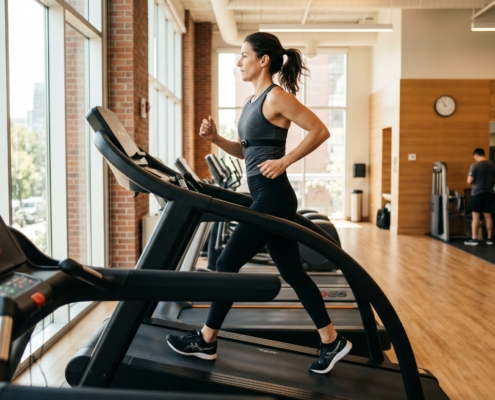 https://overhaulfitness.ca/wp-content/uploads/2026/05/banana_20260513_101330_116665-scaled.jpg
1143
2048
Michael Fouts
https://overhaulfitness.ca/wp-content/uploads/2022/09/Screen-Shot-2022-09-01-at-9.56.35-AM.png
Michael Fouts2026-05-13 20:05:112026-05-13 20:05:11Zone 2 Cardio: How to Build It Into Your Training Program
https://overhaulfitness.ca/wp-content/uploads/2026/05/banana_20260513_101330_116665-scaled.jpg
1143
2048
Michael Fouts
https://overhaulfitness.ca/wp-content/uploads/2022/09/Screen-Shot-2022-09-01-at-9.56.35-AM.png
Michael Fouts2026-05-13 20:05:112026-05-13 20:05:11Zone 2 Cardio: How to Build It Into Your Training Program