
You’ve probably tried counting calories. Maybe you’ve tracked macros in an app that made meal prep feel like filing taxes. And if you’re like most people over 35, you’ve watched those approaches work for a few weeks before life got in the way. Here’s the thing: a new narrative review just validated something far simpler — three numbers that actually stick.
What Is the 30-30-30 Rule?
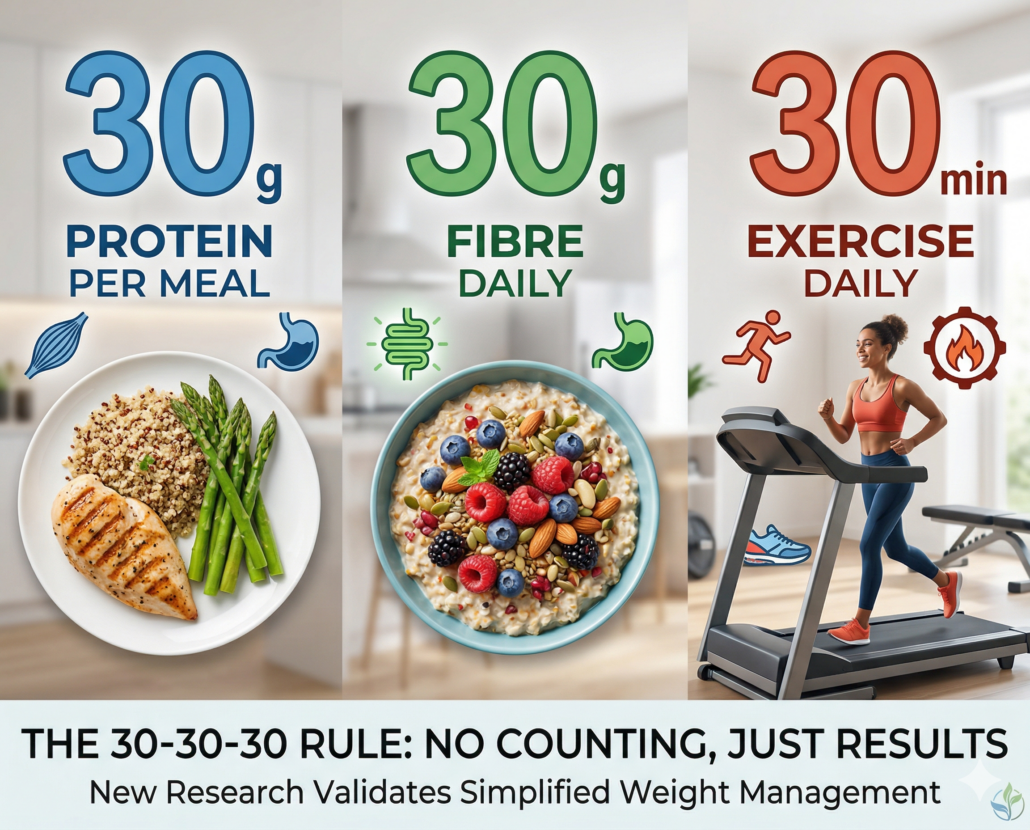
The 30-30-30 rule is a practical framework for weight management backed by a 2026 review published in PMC. The formula is straightforward: aim for 30 grams of protein per meal, 30 grams of fibre daily, and 30 minutes of exercise each day. That’s it. No food scales, no percentages, no guilt-inducing red numbers in an app.
What makes this approach different from the usual diet advice is that each component does a distinct job — and they work better together than any single element does alone. The researchers found genuine synergy between protein, fibre, and movement. Skip one, and you’re leaving results on the table. Hit all three consistently, and the effects compound.
For Canadians navigating busy schedules and long winters that make outdoor exercise feel like a chore, this kind of simple, memorable framework beats complicated meal plans every time. You can apply it at a work lunch, at a hockey arena concession stand, or while meal-prepping on Sunday night.
Why 30g Protein Per Meal Matters for Fat Loss
Protein is the most satiating macronutrient — meaning it keeps you full longer than carbs or fat, calorie for calorie. But the research points to something more specific: spreading your protein intake across meals matters more than total daily intake. Eating 90g of protein at dinner while having toast for breakfast isn’t the same as three meals with 30g each.
For adults over 35, protein for weight loss serves a dual purpose. It controls hunger, yes, but it also preserves lean muscle mass during a calorie deficit. Losing weight without adequate protein means losing muscle along with fat — and that tanks your metabolism, making regain almost inevitable. The 30g target hits the threshold needed to maximally stimulate muscle protein synthesis at each meal.
Hitting 30g isn’t as hard as it sounds. A chicken breast, a cup of Greek yogurt, a can of tuna, or a scoop of protein powder with some eggs will each get you there. The key is making it automatic — protein first at every meal, not an afterthought.
The Fibre Factor: 30g Daily for Blood Sugar and Satiety
Most Canadians get roughly half the recommended daily fibre intake. The average sits around 15g when it should be closer to 30g. This matters for weight management because fibre slows digestion, steadies blood sugar, and keeps you feeling satisfied between meals. When your blood sugar spikes and crashes, so does your willpower.
The 30-30-30 rule puts fibre on equal footing with protein and exercise — because the research shows it deserves to be there. High-fibre diets are associated with lower body weight independent of calorie intake. Fibre also feeds your gut bacteria, which emerging research links to everything from mood to metabolic health.
Practical sources include:
- Vegetables at every meal (broccoli, Brussels sprouts, carrots)
- Legumes like lentils, black beans, and chickpeas
- Whole grains — oats, quinoa, whole wheat bread
- Berries, apples, and pears with the skin on
- Seeds like chia or flax added to smoothies or oatmeal
You don’t need to track grams obsessively. Just ask yourself at each meal: where’s my fibre? If the answer is “nowhere,” add something.
30 Minutes of Daily Exercise Prevents Metabolic Slowdown
Here’s what most diet advice gets wrong: it treats exercise as a calorie-burning tool. Burn 300 calories on the treadmill, eat 300 fewer calories, lose weight faster. But the research behind the 30-30-30 rule highlights a different mechanism. Exercise prevents the metabolic adaptation that derails most diets.
When you cut calories, your body fights back. Your metabolism slows, your hunger hormones spike, and your energy expenditure drops. This is why weight loss stalls and regain happens. Regular movement — even just 30 minutes daily — signals to your body that this isn’t a famine. It helps preserve muscle, maintain metabolic rate, and improve insulin sensitivity.
The 30 minutes doesn’t need to be brutal. A brisk walk counts. Resistance training counts. Swimming, cycling, or chasing your kids around the yard — it all counts. Consistency matters far more than intensity for this particular benefit. The researchers also noted cardiometabolic improvements like lower blood pressure and better blood glucose even in participants who didn’t lose significant weight. The exercise was doing something valuable regardless of the scale.
How to Start the 30-30-30 Rule This Week
The beauty of this framework is that you can start tomorrow without overhauling your entire life. Here’s a practical approach:
- Audit your breakfast. Most people’s first meal is the weakest link — toast, cereal, or nothing at all. Add eggs, Greek yogurt, or a protein smoothie to hit that 30g protein target early.
- Add one high-fibre food to lunch and dinner. A side salad, a handful of berries, some roasted vegetables. Small additions compound quickly.
- Schedule your 30 minutes. Put it in your calendar like a meeting. Morning walks before work, a lunchtime gym session, or an evening bike ride with your partner. Whatever fits your life.
- Don’t aim for perfection. Hitting all three targets most days beats hitting them perfectly some days and ignoring them others.
At OverHaul Fitness, we build programs around exactly this kind of sustainable approach — frameworks that fit real schedules and real lives, not Instagram highlight reels.
The Bottom Line
The 30-30-30 rule isn’t revolutionary in the sense of being new information. Protein, fibre, and exercise have always mattered. What’s valuable here is the packaging — a simple, memorable framework that removes decision fatigue and works synergistically. The research confirms what practical experience has shown: doing all three together outperforms obsessing over any single factor.
For adults over 35 who’ve been burned by complicated diets and unsustainable plans, this is permission to keep it simple. Three numbers. Daily consistency. Results that actually stick.
Ready to train smarter? Explore OverHaul Fitness programs built for real people with real schedules.